Find the Assessment That Fits Your Needs
Get started now and have your assessment delivered within 24 hours.
Long-term Travel Assessment
Prepare for your stay.
Our Long-term Travel report is best suited for dispatched business travelers, students, and anyone staying in-country a few months or more.
This assessment is aimed at travelers who will be spending longer in-country.
Who is this for?
- Students preparing for semester- or year-long study abroad programs who need a deeper understanding of local norms, neighborhood dynamics, transportation patterns, safety considerations, and the broader social-political environment they will be living in.
- Professionals on medium- or long-term assignments—corporate transferees, NGO staff, consultants, teachers—who require clarity on day-to-day living conditions, local stability, institutional behavior, infrastructure reliability, and risks that may evolve over months rather than days.
- Long-stay travelers and digital nomads evaluating whether a location is suitable for extended living, including safety, cost stability, neighborhood fit, political climate, reliability of services, and potential for sudden disruptions.
- Families accompanying long-term travelers who need insight into school environments, healthcare accessibility, local crime trends, community cohesion, and general livability in the neighborhood where they will reside.
- Organizations relocating staff and wanting a third-party assessment of local conditions—housing, commuting routes, essential services, and risk trajectory—to support placement decisions and duty-of-care responsibilities.
Working on your own report? Let us help.
If you are working on your own work product, we can get you 80-90% of the way there, while informing the remaining portions. Integrate our results into your own report with or without attribution. We can deliver assessment results via a docx file for easy extraction and adoption.
It's easier, faster, and cheaper than doing it yourself!
Assessment Sections
The following report sections are included in each Long-term Travel report.
Risk Environment
Which risks show up the most in this market? Which risks are most impactful? We've gathered data--across 26 risk categories--on what people on the ground were talking about, writing about, and worried about over the last 12 months.
This section is comprised of three sub-sections:
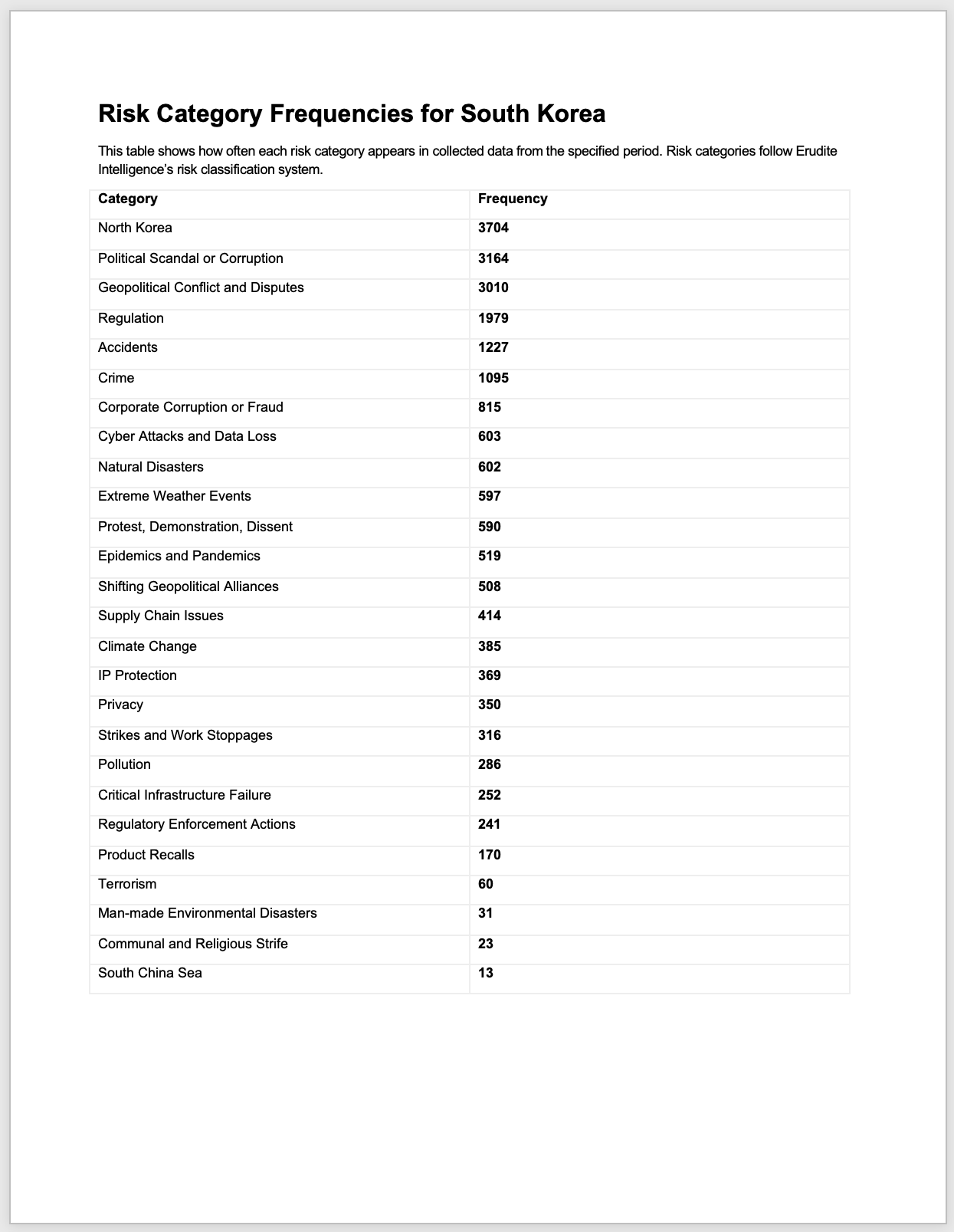
- Risk Frequency: Which risk categories were most talked about and most written about?
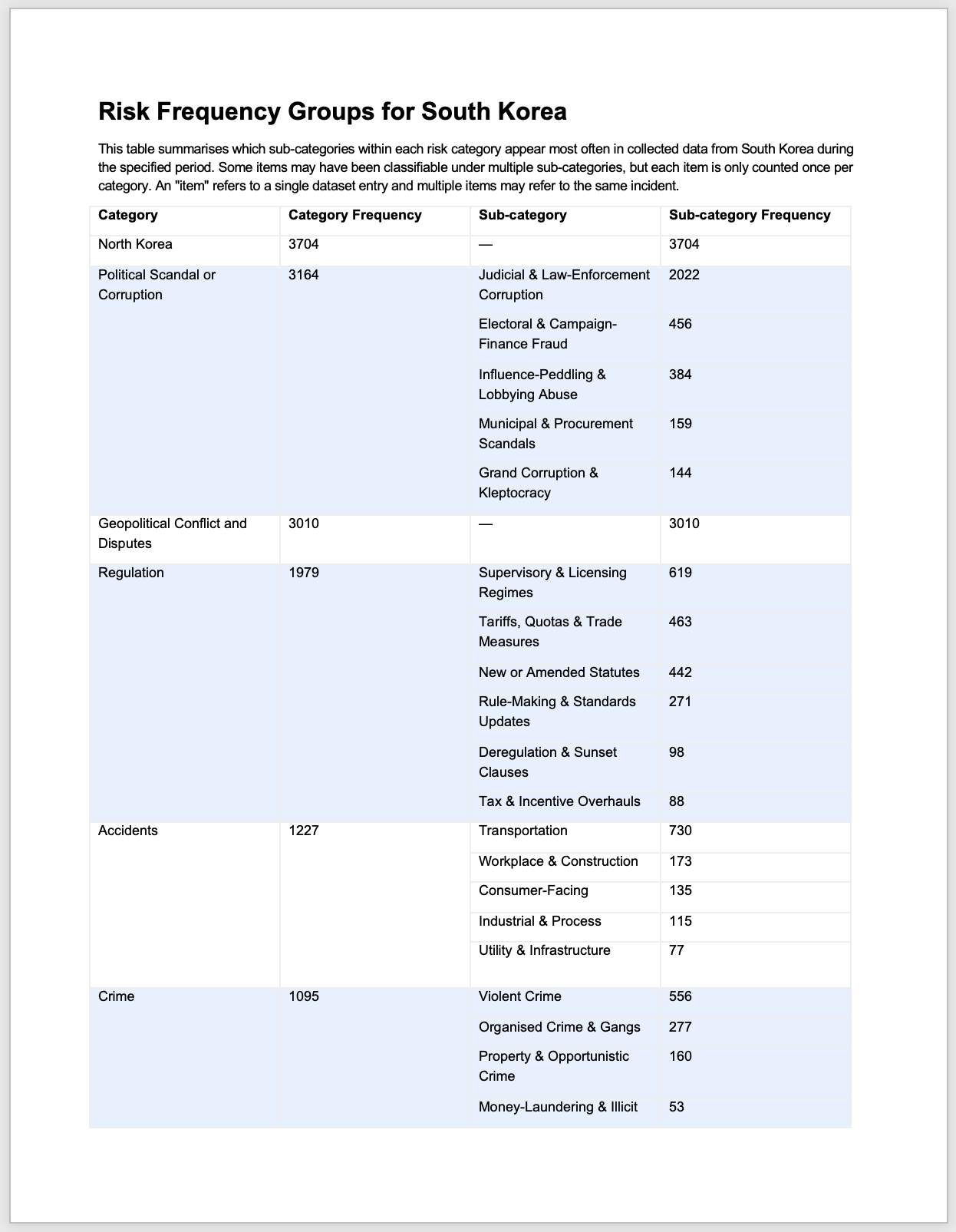
- Risk Subcategories: A detailed breakdown of risks by category and sub-category over the last 12 months.
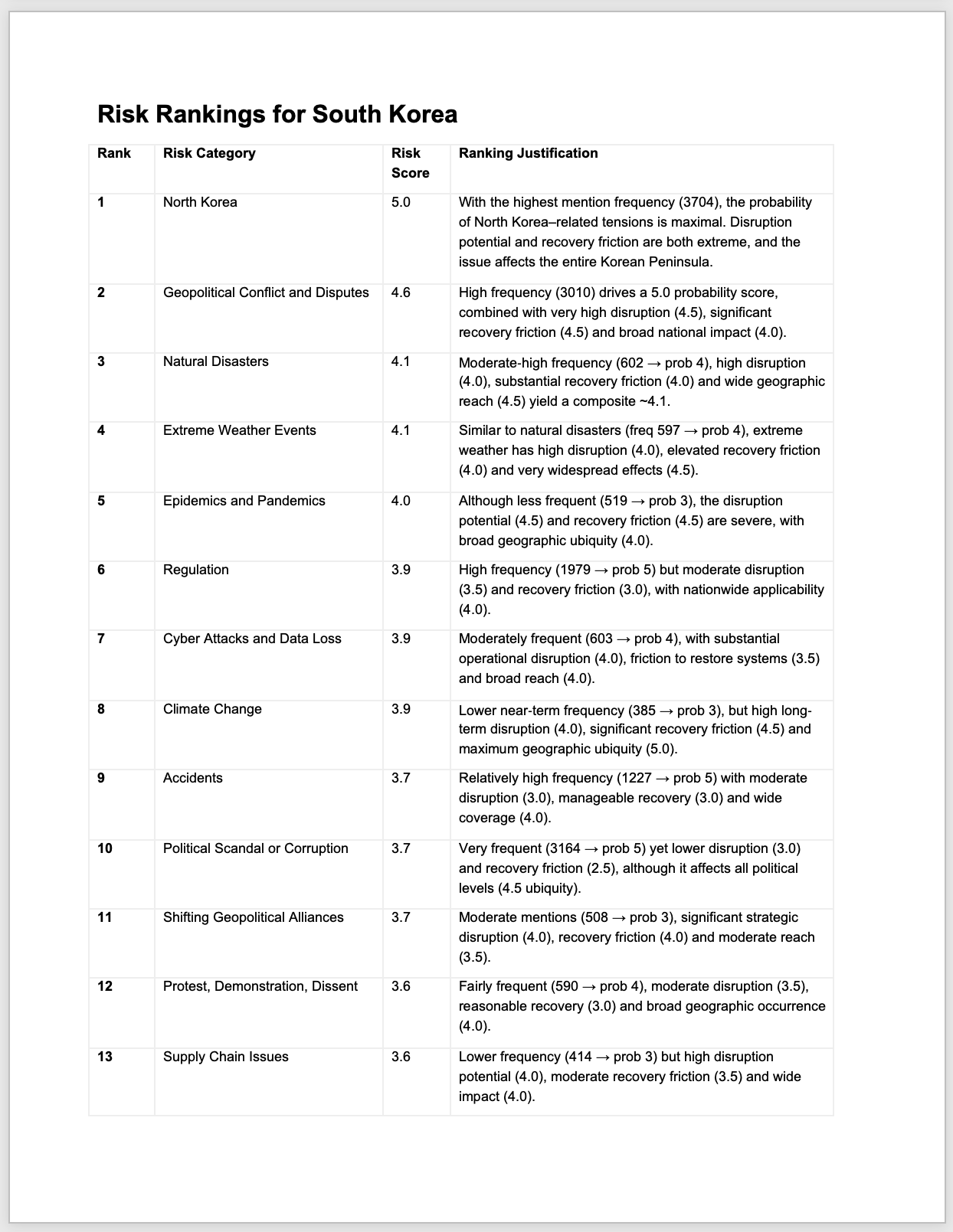
- Risks Prioritized: Which risks are most impactful and most important to mitigate in this market?
~10 pages in length
How This Section is Made
The Risk Environment section is composed of three subsections: Risk Frequencies, Risk Subcategories, and Risk Rankings.
Risk Frequencies are made by counting up the number of categorizations we have made of data collected over the time period in question. When an assessment is ordered, we look back over the preceding 12 months at all of the risk categorizations we have made during that period. These categorizations don't capture everything that occurred during that time, but they reflect the frequencies of events and issues related to specific categories during that time.
Risk Subcategories
Each risk category is further broken down into smaller sub-categories for a better understanding of the types of events that have occurred and what kind of risk they presented.
Risk Rankings
The risk categories we use are then ranked for a specific country, over the last 12 months. Scoring method: 1-5 for each of four weighted dimensions (40% disruption potential, 30% probability 2025-27, 20% recovery friction, 10% geographic ubiquity). Resulting composite = 0-5. All scores are directional and rounded to one decimal.
Risk Events
What risk events actually occurred over the last 12 months? We outline all the major ones across 26 risk categories.
- Accidents
- Climate Change
- Communal and Religious Strife
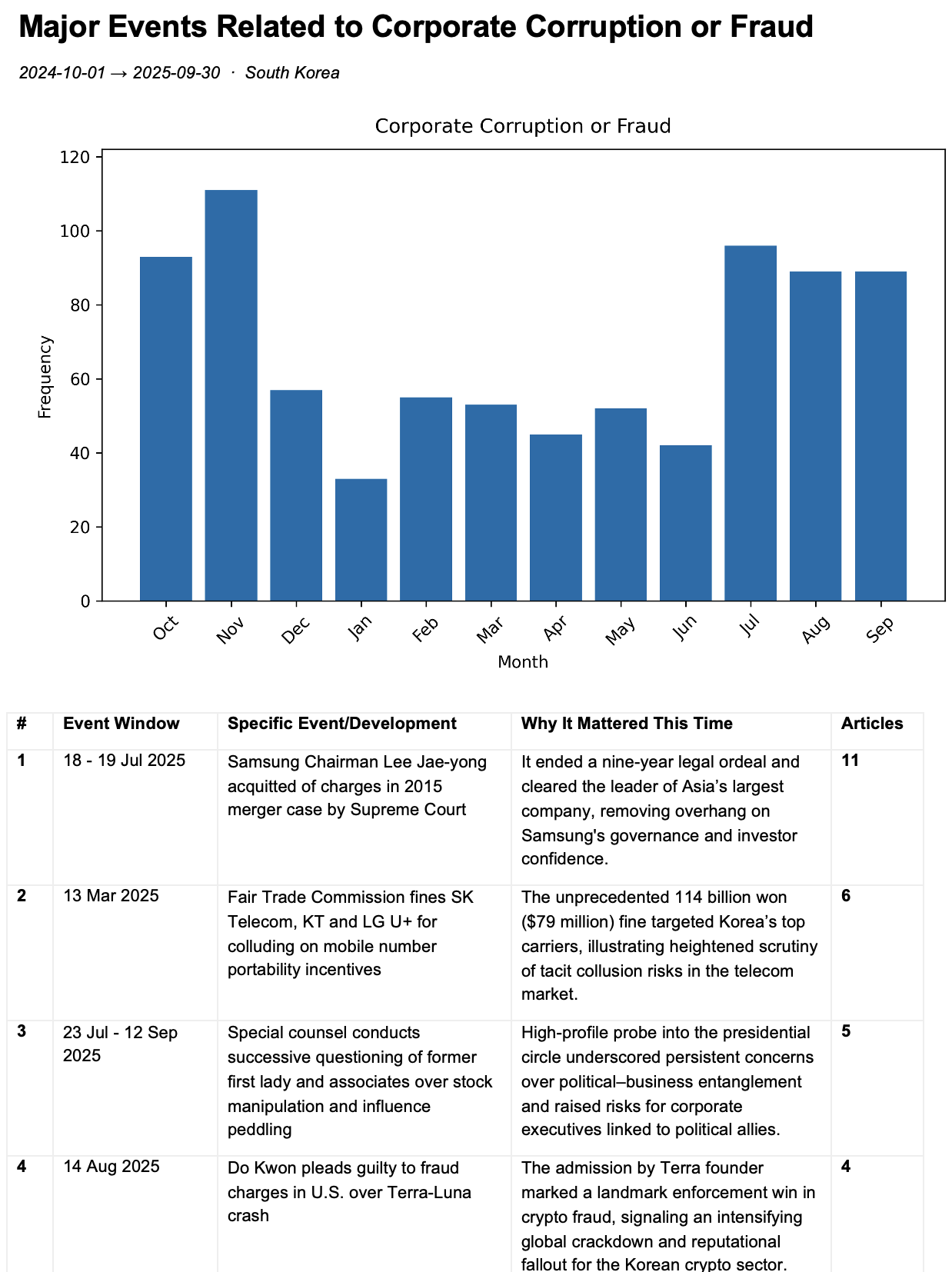
- Corporate Corruption or Fraud
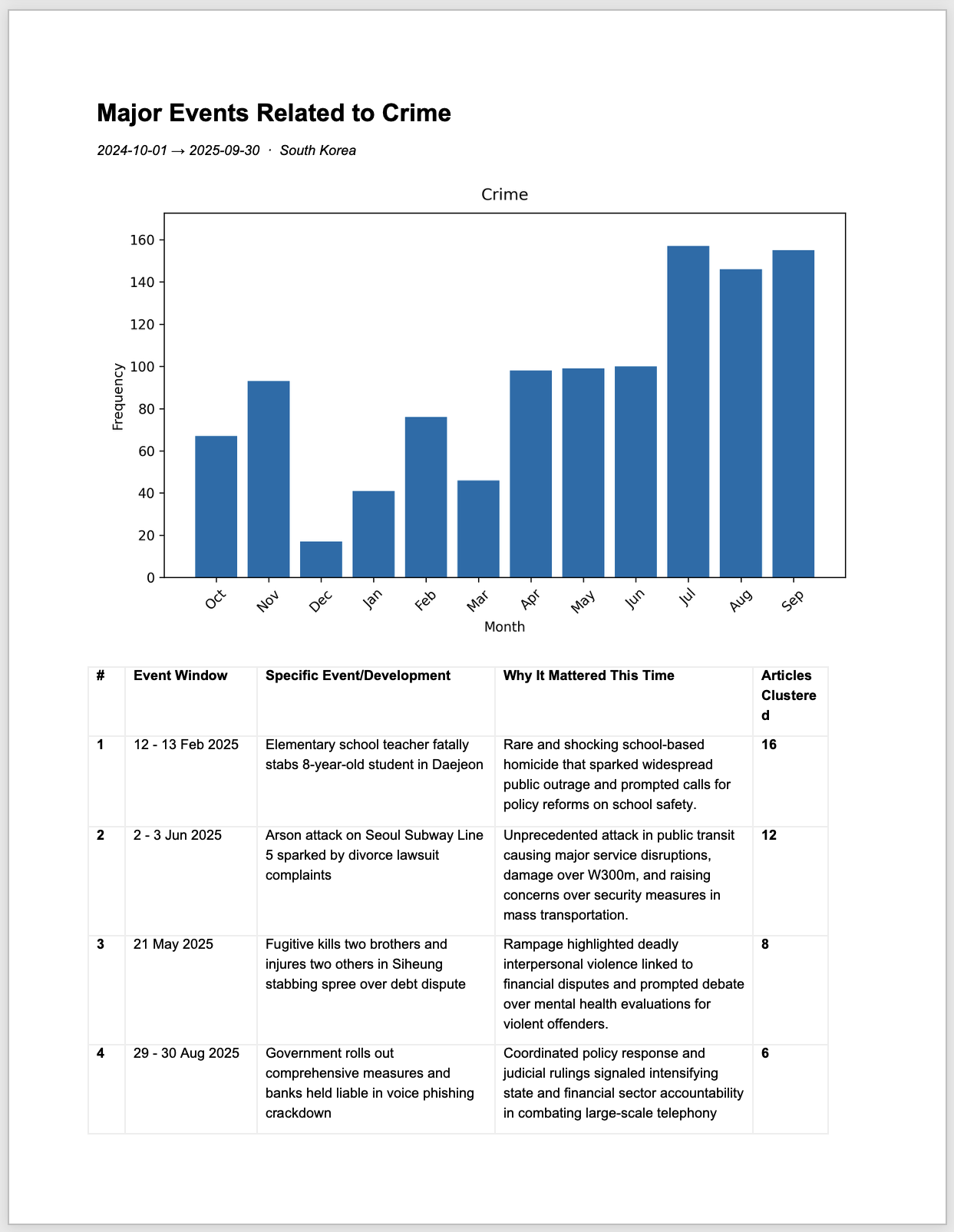
- Crime
- Critical Infrastructure Failure
- Cyber Attacks and Data Loss
- Epidemics and Pandemics
- Extreme Weather Events
- Geopolitical Conflict and Disputes
- IP Protection
- Man-made Environmental Disasters
- Natural Disasters
- North Korea
- Political Scandal or Corruption
- Pollution
- Privacy
- Product Recalls
- Protest, Demonstration, Dissent
- Regulation
- Regulatory Enforcement Actions
- Shifting Geopolitical Alliances
- South China Sea
- Strikes and Work Stoppages
- Supply Chain Issues
- Terrorism
~40-50 pages in length
How This Section is Made
Risk Events
Prominent risk events are discerned and reported on for each category of risk we cover. The events are derived from previous “Developments” we have reported on for our intelligence reports over the last 12 months. Developments represent what people on the ground, in country, are talking about, writing about, and creating policy for.
Since our intelligence reports come out three times per week, we are often reporting on continuing stories and issues each week as they develop and morph. For our assessments, we then pull from these previously identified events to find the ones that represented the largest sources of risk over time rather than just the short snapshot given in acute reports.
Government Advisories
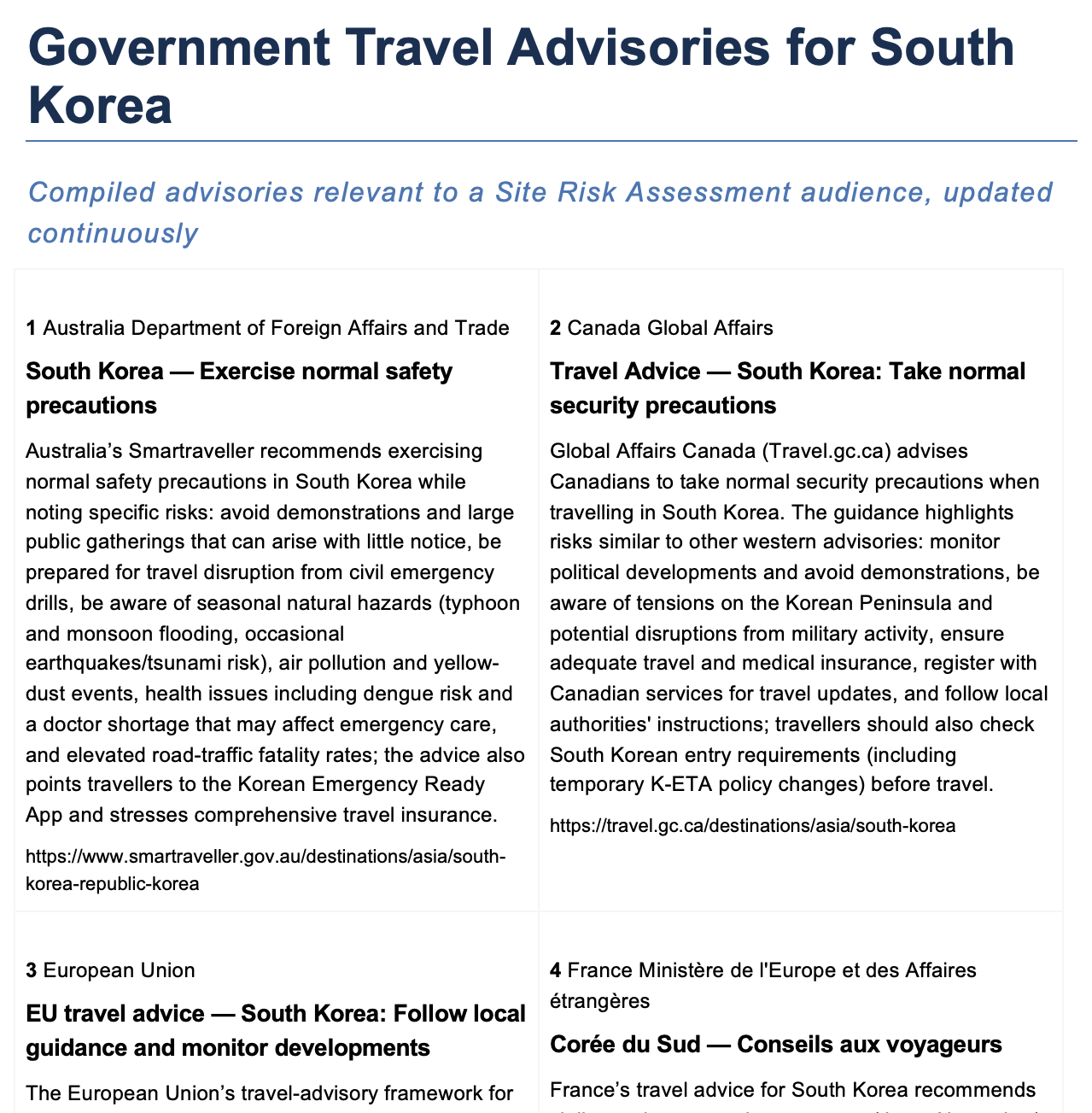
A survey of a variety of government travel advice for your destination.
Government agencies currently surveyed include:
- US Department of State
- UK Foreign, Commonwealth & Development Office
- Canada Global Affairs
- Australia Department of Foreign Affairs and Trade
- New Zealand Ministry of Foreign Affairs and Trade
- European Union
- Germany Auswärtiges Amt
- France Ministère de l'Europe et des Affaires étrangères
- Japan Ministry of Foreign Affairs
- Singapore Ministry of Foreign Affairs
~3 pages in length
How This Section is Made
Advisory data from all 10 named agencies is scraped directly from the open website data of the agencies. This is done during report creation so that the data is as fresh as possible.
Region, City, Neighborhood
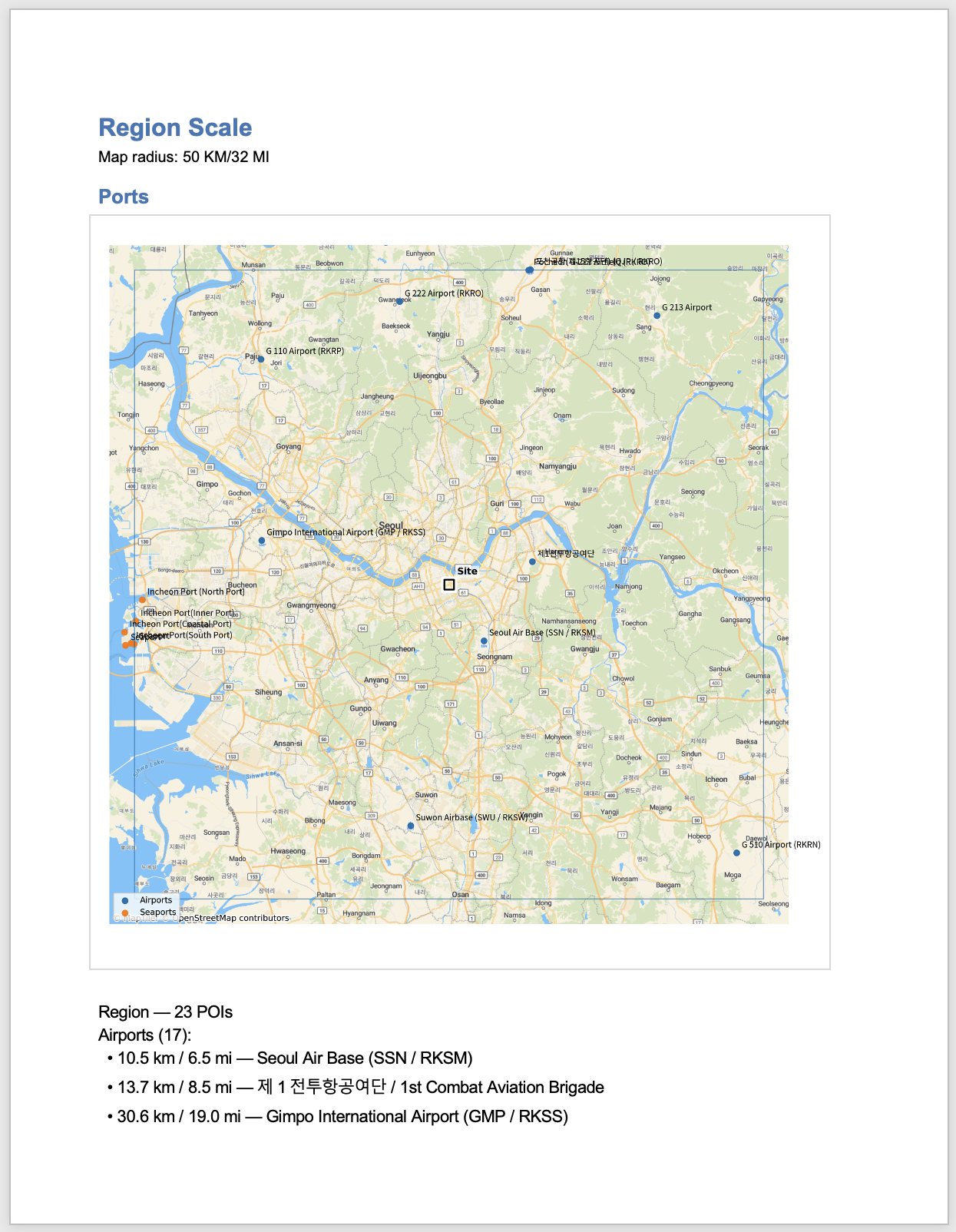
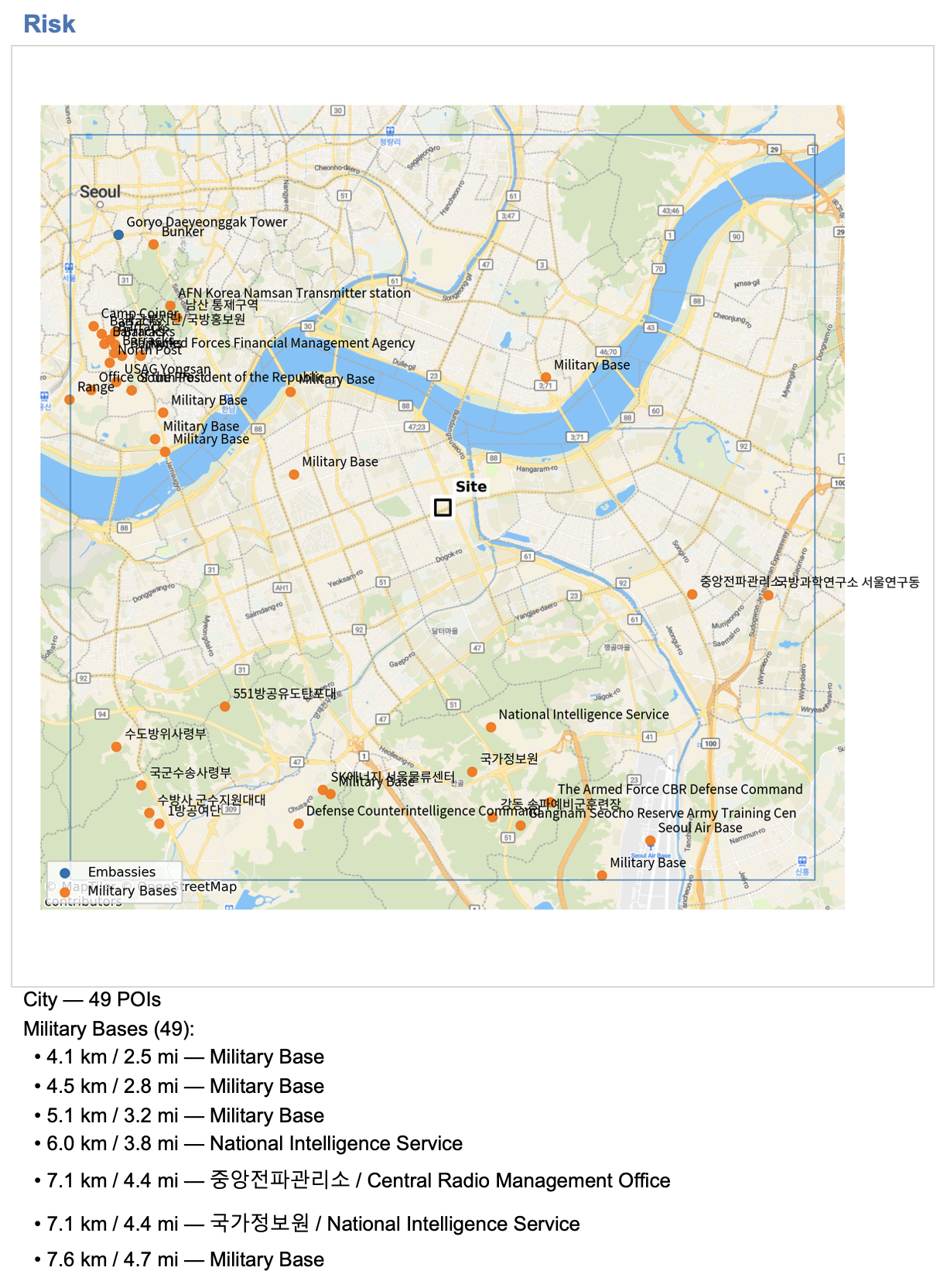
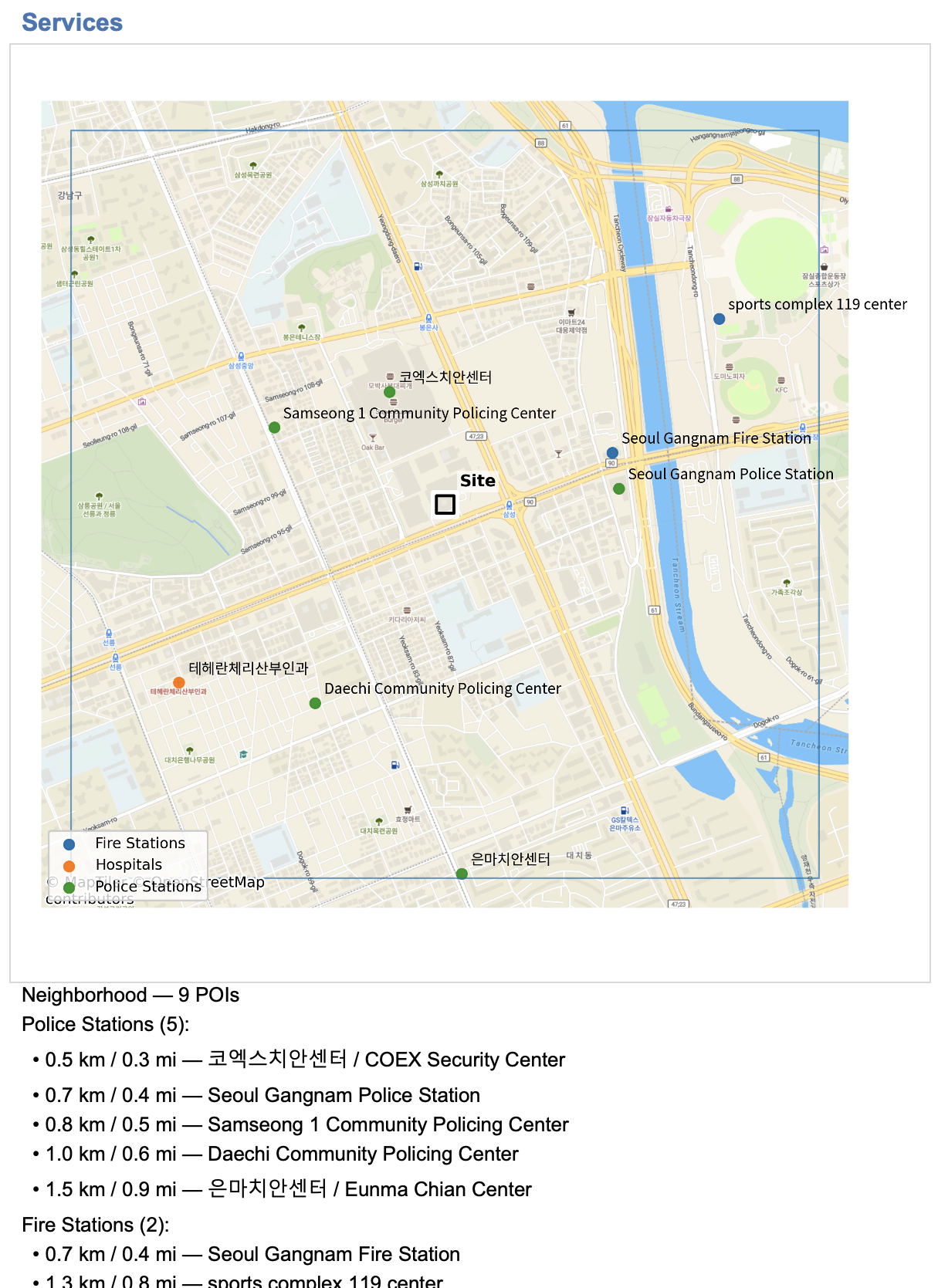
An analysis of three different geographic scales, with the primary site of interest at the center of each scale map.
These maps are not meant for navigation, but rather to provide context about the risk environment of the area surrounding the primary address at three different scales.
Different kinds of Points of Interest (POIs) are shown on each map, with the understanding that different kinds of sites offer opportunity and may attract attention and risk.
These maps may be useful for understanding the concentration of critical infrastructure, services, and transportation "heat" in the area, as well as that of potential vulnerabilities and risks.
~40 pages in length
How This Section is Made
We gather data on the key sites at each scale then plot them on maps of that scale, along with listing the distance of each site to the primary address of concern.
At each scale, we look at the following types of sites:
Ports: Airports, Seaports
Transit: Subways, Trains
Infrastructure: Power Plants, Water Plants
Services: Police, Fire, Hospitals
Risk: Military Bases, Embassies
Site Analysis
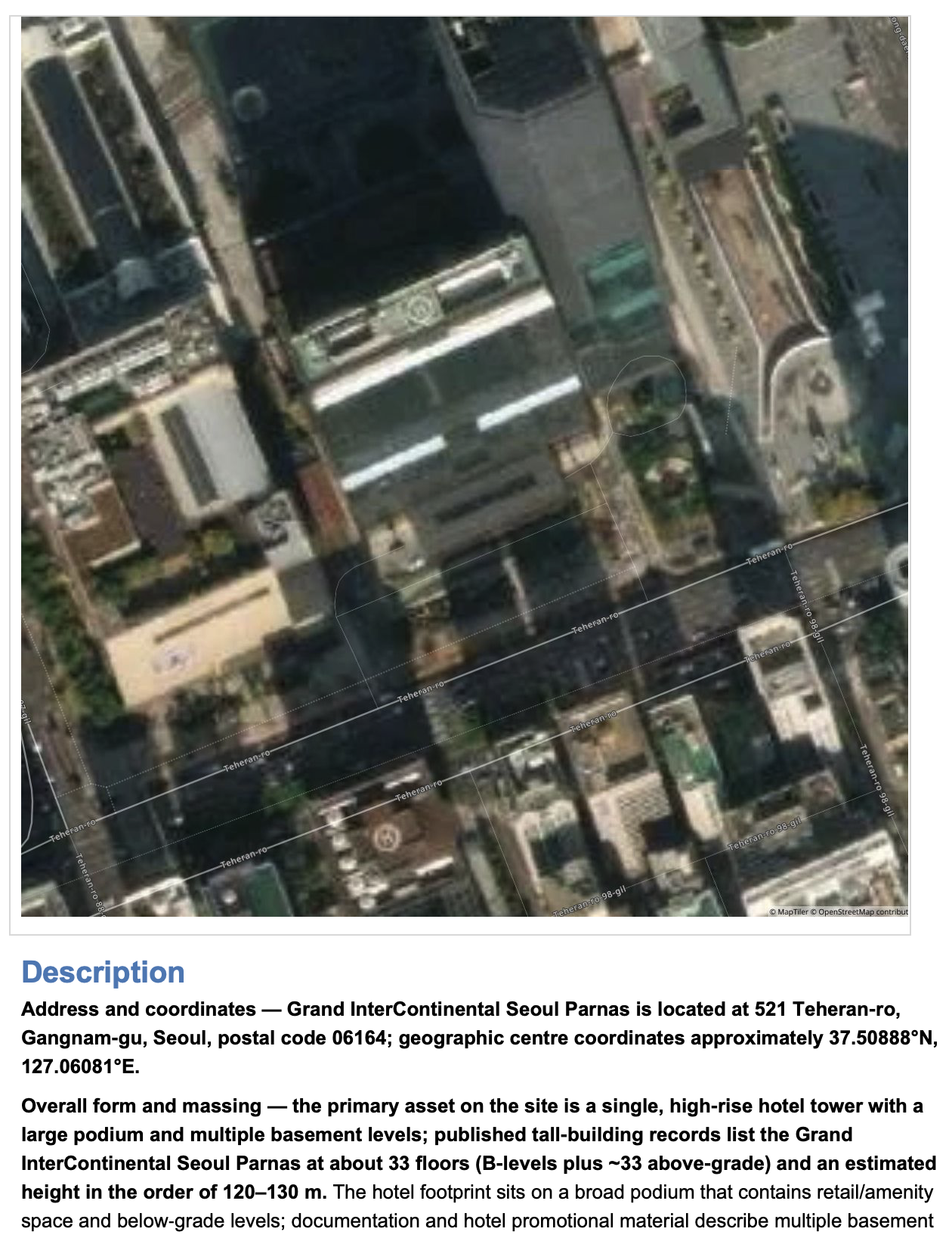
This section looks directly at the specific site you are interested in.
We provide an analysis of the site, assets on the ground, and the immediate area around the site.
We conclude with a description of the site and an analysis of site-specific risk based on past events at the site, in the area, and nationally.
~6 pages in length
How This Section is Made
Images and maps of the site are combined with:
Site Description: An in-depth description of the site and its surroundings.
Site-Related Risk Based on Past Events: An analysis of site-related risk based on events that have happened on or near the site in the past. This includes the neighborhood and regular/expected flows around the site.

Current Issues
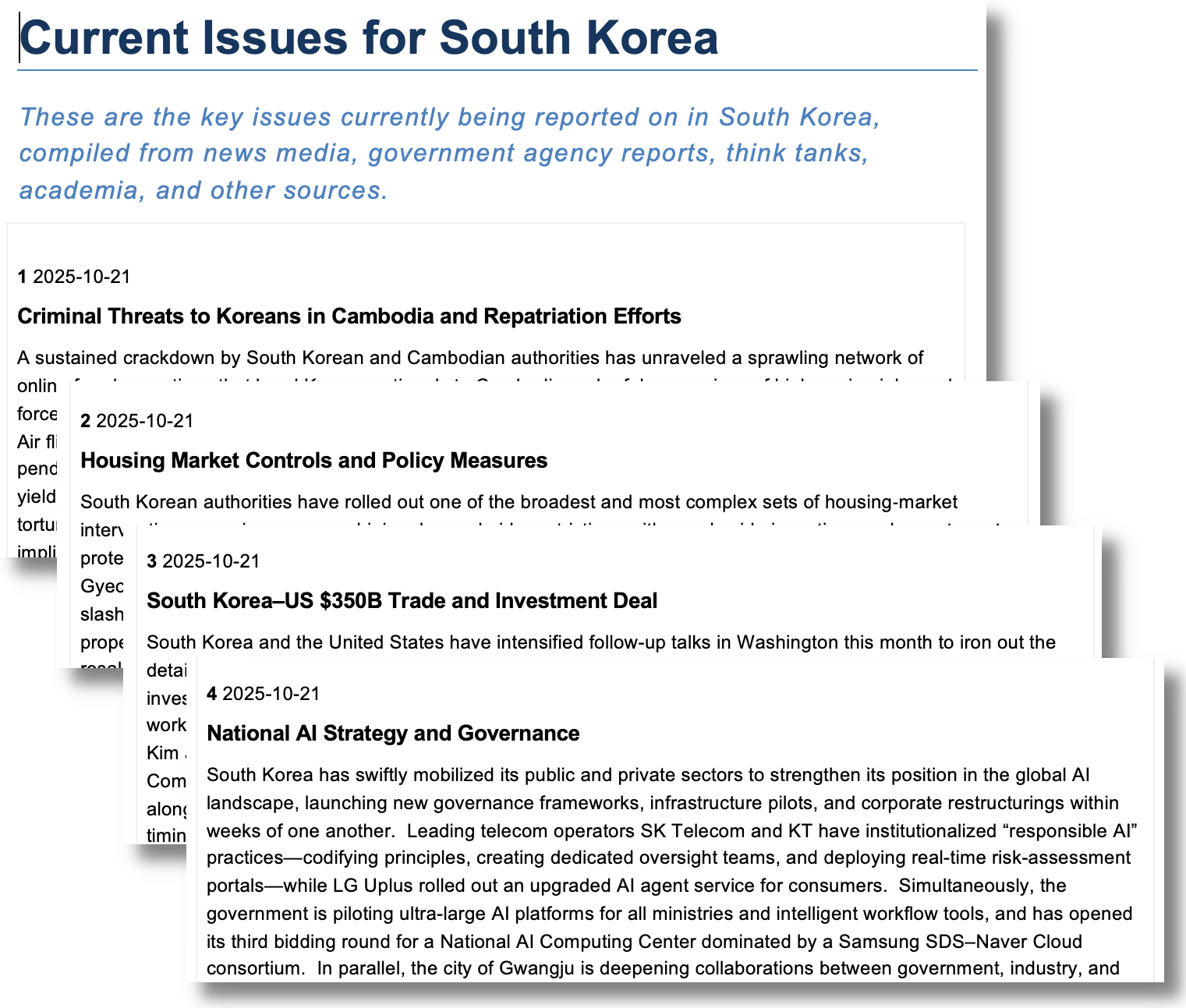
What's happening right now? What is everyone on the ground talking about, writing about, and concerned about right now?
Current Issues are derived from the "Developments" of the past two weeks--what was reported on in our country intelligence Daily Briefings over that period. We select only those developments spanning the whole of the last week (or longer) for inclusion.
~5-8 pages in length
How This Section is Made
Data is gathered from our intelligence data and from recent Developments reporting we have done. From among those Developments, we look for the most impactful ones that are currently still ongoing.
Have questions about our assessments?
How can we help?

Ready to order your Long-term Travel Assessment?
Get started now and have your assessment delivered within 24 hours.
See Long-term Travel Assessment Pricing and OptionsAssessments FAQ
Each section of every report is generated independently using its own data pipelines and analytic methods. For a detailed explanation of how data is gathered, processed, and correlated for each assessment type, please refer to the individual product pages.
For site-focused reports, the analysis is tailored to the exact address or site you specify. For national-level reports, the primary variable is the date on which the assessment is produced, as all analysis reflects the most current one-year window of available data.
While each assessment follows a standardized production methodology for consistency, all underlying data is freshly collected and bounded to the previous 12 months to ensure relevance, trend visibility, and accuracy.
If you require an assessment for a location outside our current coverage, please contact us. We will review your request and advise whether we can produce it.
As a result, the information incorporated into our assessments is refreshed continuously and is as current as feasibly possible.
For online transactions, Erudite Intelligence does not collect or store any payment information; all payments are processed securely through PayPal. For invoiced corporate clients, only the billing details required for invoicing are collected.
We are also available for additional bespoke analysis or tasking upon request.
For site-focused assessments, we need the primary site address or exact site name.
For Executive Protection (EP) Advance reports covering multiple sites (up to five), we require the primary location plus any secondary addresses.
Because precise geolocation is critical to accurate analysis, we may contact you for clarification if any address information appears incomplete or ambiguous.
Each question is optional, but the more information you provide, the better we can tailor the assessment to your unique situation. Answer as many or as few questions as you are comfortable with.
Explore Our Assessments
Find the Assessment That Fits Your Needs